
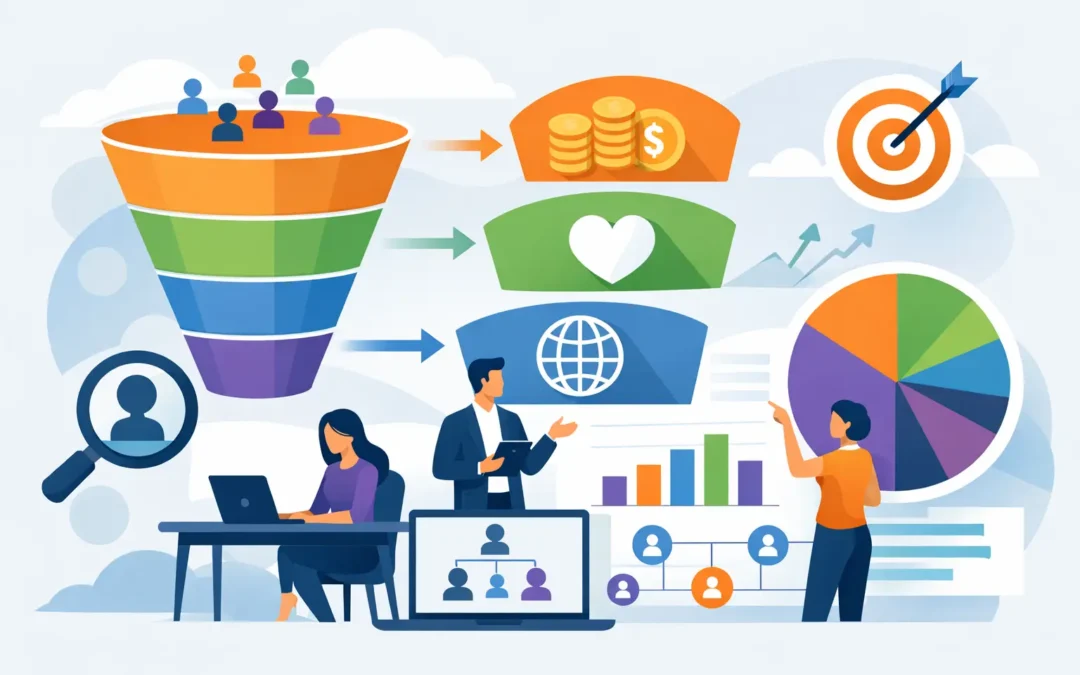
A donor file can look healthy on paper and still underperform in the mail. If every donor receives the same ask, same message, and same frequency, your organization is paying to ignore the information supporters have already given you. This guide to donor file segmentation shows how to turn donor data into more relevant campaigns, stronger response, and better stewardship of every fundraising dollar.
What Donor File Segmentation Actually Does
Donor file segmentation is the process of dividing your donor database into meaningful groups based on shared characteristics, behaviors, or giving history. The purpose is not to create more administrative work. It is to make smarter decisions about who receives an appeal, what they receive, how much you ask for, and when you contact them.
A well-segmented file helps a growing nonprofit avoid two costly mistakes: under-asking donors with clear capacity and over-mailing supporters who need a different kind of communication. It also gives your creative team a more precise job. Rather than writing one broad message intended for everyone, they can build appeals around the motivations and relationship stage of each audience.
Segmentation does not require a massive database or an enterprise-level data operation. It requires a clean file, clear campaign goals, and a disciplined approach to testing. Start with the data you can trust, then add complexity only when it improves decisions.
Start With the Questions That Affect Revenue
Before creating segments, define what the campaign needs to accomplish. A donor renewal campaign requires a different strategy than a year-end appeal, monthly giving push, reactivation effort, or acquisition mailing. The segment should answer a practical question, such as: Who is most likely to renew? Which donors should receive a higher ask? Which lapsed supporters are worth reactivating now?
For most nonprofits, the foundation is RFM: recency, frequency, and monetary value. Recency measures how recently someone gave. Frequency tracks how often they have given. Monetary value reflects their total giving, most recent gift, or average gift. Together, these measures provide a useful view of donor engagement and potential.
A donor who gave $50 last month is in a very different position from someone who made one $50 gift three years ago. Treating them the same may be easy operationally, but it weakens relevance and can waste production and postage budget.
Use Recency to Protect Your Active File
Recency is often the strongest predictor of response. Recent donors know your organization, remember their gift, and are more likely to respond to a timely follow-up. They should generally receive consistent renewal communication, especially during high-response periods such as year-end.
Define recency windows that fit your giving cycle. For one organization, an active donor may be someone who gave within the last 12 months. For another, especially one with seasonal giving patterns, a 24-month window may be more useful. The right definition depends on your data, not a universal rule.
Consider separating active donors into groups such as 0-3 months, 4-12 months, and 13-24 months. The newest donors may need an immediate thank-you and impact-focused cultivation before another direct ask. Donors approaching their renewal anniversary may need a more direct case for support and a personalized gift string.
Let Frequency Shape the Relationship
Frequency reveals whether a donor is building a habit. A one-time donor, a repeat annual donor, and a monthly donor should not receive identical communications.
One-time donors often represent the biggest retention opportunity. Their first gift deserves a thoughtful welcome sequence that demonstrates impact, sets expectations, and gives them a reason to give again. Repeat donors may respond well to messaging that recognizes their continuing commitment. Monthly donors typically need stewardship that reinforces the value of their ongoing support rather than repeated upgrade requests.
Frequency can also help identify donors with potential for recurring giving. A supporter who has made several modest gifts over the past year may be a stronger monthly giving prospect than a higher-dollar donor who gives once during a crisis.
Set Ask Amounts With Monetary Data
Gift strings should reflect what a donor has demonstrated they can give. Generic ask arrays are simple, but they leave money on the table with higher-value donors and can feel unrealistic to lower-dollar supporters.
A practical starting point is to build ask strings from a donor’s most recent gift, average gift, or highest gift. For example, a donor whose recent gift was $35 might see $35, $50, $75, and $100. A donor with a $250 history should not receive the same string.
There are trade-offs. Highly individualized gift strings can improve relevance, but they add setup and quality-control requirements. If your team lacks the data or production infrastructure to manage many versions, use a smaller number of well-defined giving bands. Accuracy matters more than excessive personalization.
Add Segments That Improve the Message
RFM provides the core, but donor behavior and source data can make campaigns more effective. The key is to use additional segments only when they change the offer, message, channel, or timing.
Acquisition source is one of the most valuable additions. A donor acquired through an emergency appeal may be motivated differently than someone acquired through an event, advocacy action, peer-to-peer fundraiser, or direct mail campaign. Source data can inform both the story you tell and the point of entry you use for future asks.
Channel preference is equally practical. If a donor consistently responds by mail, a digital-only strategy may reduce response. If they give through email and have not engaged with mail, they may be better served by digital cultivation. This does not mean every supporter should receive only one channel. Coordinated multichannel campaigns often perform well, but the cadence should respect donor behavior and stated preferences.
Other useful segments include geographic region, program interest, event participation, volunteer status, and communication permissions. A disaster-relief organization, for example, may segment by a donor’s connection to a region. A health nonprofit may tailor stories by program area. If the information will not materially alter the campaign, do not build a segment around it.
Build a Practical Segmentation Plan
A donor file segmentation strategy should be documented before creative and production begin. That reduces last-minute changes, prevents exclusions from being missed, and makes campaign results easier to evaluate.
Start by identifying the campaign universe. Define who is eligible to receive the appeal and who must be excluded, such as deceased records, active do-not-mail requests, recent major gifts, board members, or donors already in a high-touch stewardship process. Suppression is not a technical afterthought. It protects donor trust and avoids unnecessary expense.
Then establish a manageable segment structure. For a standard direct mail renewal, you may have active multi-gift donors, active one-time donors, recently lapsed donors, deeply lapsed donors, monthly donors, and higher-value donors receiving a customized treatment. Each group should have a clear rationale and a specific strategy.
Document the following for every segment:
- Selection criteria, including gift dates, gift counts, and dollar thresholds
- Message or package version
- Ask-string logic and reply device requirements
- Channel and contact timing
- Suppression rules and owner for final approval
This level of clarity helps your internal team, agency partner, data processor, and production team work from the same plan. It also makes post-campaign reporting more useful because you can see what happened by segment rather than relying on one blended response rate.
Test Before You Multiply Complexity
Segmentation should produce learning, not just more versions. Test one meaningful variable at a time whenever possible. You might compare a standard ask string against a donor-specific string, a renewal message against an impact message, or a 13-24 month lapsed package against a 25-48 month reactivation package.
Use control groups when budget allows. A small random group can continue to receive the existing approach while the test group receives the new treatment. This creates a credible basis for deciding whether the change drove improvement.
Evaluate results beyond response rate. Track average gift, net revenue, cost to raise a dollar, renewal rate, and long-term value where possible. A segment with a lower response rate may still generate more net revenue if its average gift is substantially higher. Likewise, a package that performs well for immediate revenue may not be the right choice if it damages retention or increases opt-outs.
For growing nonprofits, the best test is often the one that can be executed correctly and repeated. A complicated model with uncertain data inputs is less useful than a straightforward segmentation plan that improves campaign after campaign.
Keep the File Clean and the Rules Consistent
No segmentation strategy can compensate for weak data hygiene. Standardize gift dates, source codes, campaign codes, donor IDs, and communication preferences. Review duplicate records, returned mail, deceased flags, and inconsistent data entry before each major campaign.
It is also wise to establish clear ownership. Someone must be accountable for approving the final donor universe, segment counts, suppressions, and version logic. A missed suppression or incorrect gift string can undermine donor confidence quickly, particularly among long-time or higher-value supporters.
Monarch Direct Marketing approaches segmentation as part of the full campaign operation, not a spreadsheet handed off at the end. Strategy, creative, production, and reporting need to align around the same donor logic. That alignment reduces friction and gives each campaign a clearer path to measurable improvement.
Your donor file is not merely a mailing list. It is a record of relationships, choices, and signals of trust. Treat those signals with discipline, start with segments that change real decisions, and let each campaign teach you how to invest the next fundraising dollar more wisely.