A donor gives through a spring appeal, opens your email thank-you, visits your website a week later, then gets a printed newsletter a month after that. Most nonprofits treat those moments as separate touches. Donors do not. If you want to learn how to build multi channel donor journeys, the starting point is simple: stop planning campaigns by channel and start planning them by donor experience.
That shift matters because response does not come from volume alone. It comes from relevance, timing, and consistency. For growing nonprofits, that is good news. You do not need a massive team or a complicated tech stack to create stronger donor journeys. You need a clear strategy, disciplined sequencing, and a practical way to connect direct mail, email, digital, and stewardship.
What multi channel donor journeys actually do
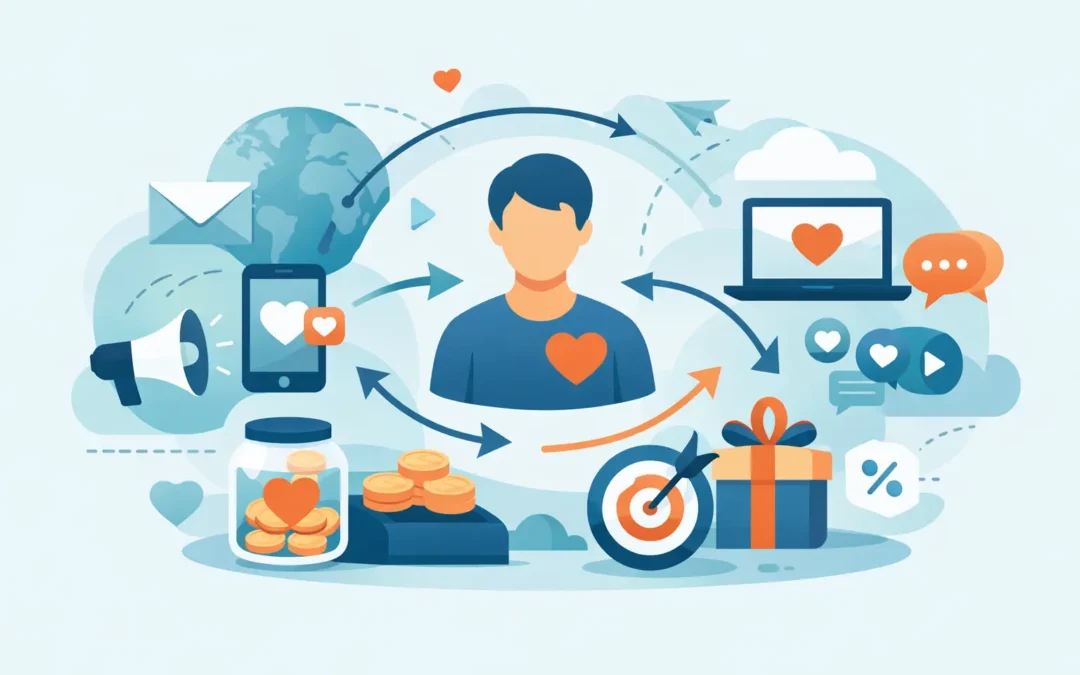
A multi channel donor journey is the planned series of messages, asks, and stewardship touches a donor receives across channels over time. The goal is not to be everywhere. The goal is to move someone from awareness to action, and then from first gift to ongoing support, using each channel for what it does best.
Direct mail can carry emotional weight and drive strong response, especially for older or established donor files. Email is fast, flexible, and useful for follow-up. Paid digital can reinforce a message and keep your campaign visible between inboxes and mailboxes. Phone, SMS, and print newsletters can strengthen retention when they are used with discipline.
The mistake is assuming every donor should get the same sequence. They should not. A first-time online donor, a long-time mail responder, and a lapsed mid-level donor need different journeys because their motivations, habits, and likelihood to respond are different.
How to build multi channel donor journeys from the file up
The strongest donor journeys do not begin with creative concepts. They begin with your donor file. Before you decide what to send, decide who should receive it and why.
Start by identifying a small set of practical segments. For most nonprofits, that means at least new donors, active donors, lapsed donors, monthly donors, and higher-value donors. You can add behavioral factors such as channel preference, recency, frequency, and average gift. Keep the segmentation useful. If your team cannot execute against it, it is too complex.
From there, define the business goal for each journey. A new donor journey should focus on second gift conversion and early trust-building. An active donor renewal journey should protect retention and lift average gift. A lapsed donor journey should test whether reactivation is still efficient. Each journey needs one primary objective. If you try to do everything at once, performance usually slips.
Map the journey around donor behavior
Once the segment and goal are clear, map the donor experience in sequence. Think in terms of moments, not isolated tactics. What triggered the journey? What should happen immediately after the gift or lapse? What message should arrive next? Which channel is most likely to move the donor forward at that point?
For example, a new donor journey might begin with an immediate email receipt and thank-you, followed by a mailed welcome package, then a short email series that reinforces impact and introduces the next giving opportunity. A targeted digital reminder can support the first renewal ask if budget allows. The point is not to stack channels randomly. The point is to use each one with intention.
Timing matters as much as content. If the email and direct mail ask land too far apart, the momentum fades. If they arrive all at once, the campaign can feel repetitive or wasteful. Good sequencing creates recognition without fatigue.
Match channels to function, not fashion
Not every channel deserves equal weight. Some nonprofits overinvest in digital because it feels efficient. Others cling to mail because it has always worked. Strong planning is more disciplined than that.
Use direct mail when the ask needs space, emotion, and perceived importance. Use email for immediacy, reminders, and stewardship follow-up. Use paid digital to extend reach, reinforce a core message, or re-engage known audiences. Use SMS carefully, usually when you already have trust and clear opt-in. Use phone when the donor value or relationship justifies the cost.
This is where trade-offs matter. More channels can improve response, but only when the message stays coordinated and the audience size supports the investment. For a smaller nonprofit, two or three channels executed well will usually outperform five channels managed inconsistently.
Build one message, then adapt it
A donor journey should feel connected even when the formats are different. That does not mean copying the same headline into every channel. It means keeping the core proposition consistent.
Your campaign should answer the same basic questions everywhere: why this matters now, what the donor can do, and what impact their gift will have. The mail package may carry the full story. The email may focus on urgency or a deadline. A digital ad may simply reinforce the offer and recognition. Different execution, same strategic message.
Consistency builds confidence. When donors see a familiar appeal across touchpoints, they are more likely to understand the ask and respond. When every channel sounds like a separate campaign, response weakens because recognition drops.
Measure the journey, not just the channel
One of the biggest reasons nonprofits struggle with multi channel planning is measurement. Teams often review direct mail results in one report, email metrics in another, and digital performance somewhere else. That creates channel silos in reporting, which usually leads to channel silos in strategy.
If you want better decisions, measure the journey as a coordinated effort. Look at total response, total revenue, average gift, cost to acquire or renew, and retention over time. Then look at channel-level performance as supporting detail.
This is especially important when one channel assists another. An email reminder may not produce the final gift, but it may lift direct mail response. A digital ad may not carry the strongest return on its own, but it may keep the appeal visible long enough for the donor to respond by check or on your site. If you judge every touch in isolation, you can end up cutting the very channels that improve overall campaign performance.
Start with a testable framework
You do not need perfect attribution to improve results. You do need a framework your team can repeat. Set a baseline for each audience, test one or two changes at a time, and compare results over multiple campaigns.
Test sequence before you test minor creative details. Test whether a reminder email sent three days after mail drop performs better than one sent seven days later. Test whether lapsed donors respond better to a stronger deadline message or a mission-first reactivation package. Test whether new donors need two stewardship touches before the next ask or three. These are the decisions that change revenue.
Common mistakes that weaken donor journeys
The first mistake is overcomplicating the plan. If your calendar, segmentation, and reporting system are too complex for your staff to manage, execution will suffer. A simpler journey that launches on time and stays coordinated is usually the better choice.
The second mistake is treating stewardship as filler between asks. It is not. Stewardship is what gives the next ask a better chance to succeed. Thank-yous, impact updates, and donor-centered reporting help donors feel recognized and informed. That is not soft messaging. It is revenue protection.
The third mistake is ignoring operational reality. Creative strategy only works when the production timeline, data quality, approval process, and channel coordination can support it. This is where many nonprofits lose efficiency. The plan may be sound, but internal handoffs slow it down or break consistency. An integrated partner model can help reduce that friction because strategy, creative, production, and reporting stay aligned.
A practical model for growing nonprofits
If your organization is still building its fundraising infrastructure, keep your first version focused. Start with one high-priority journey, such as new donor onboarding or annual renewals. Use two or three coordinated channels. Define the sequence, the message, and the measurement plan before launch.
Then improve from there. Once the journey is stable, add nuance. Refine segments. Adjust timing. Introduce a stronger stewardship layer. Expand to another donor group. This kind of disciplined growth is more sustainable than trying to launch a fully mature multi channel system all at once.
At Monarch Direct Marketing, this is often where nonprofits gain traction fastest: not by adding more complexity, but by making every touch work harder together.
A strong donor journey should make the next action feel natural. When your channels are aligned, your timing is intentional, and your message stays clear, donors do not experience separate campaigns. They experience a relationship worth continuing.